
9 common nose types and shapes
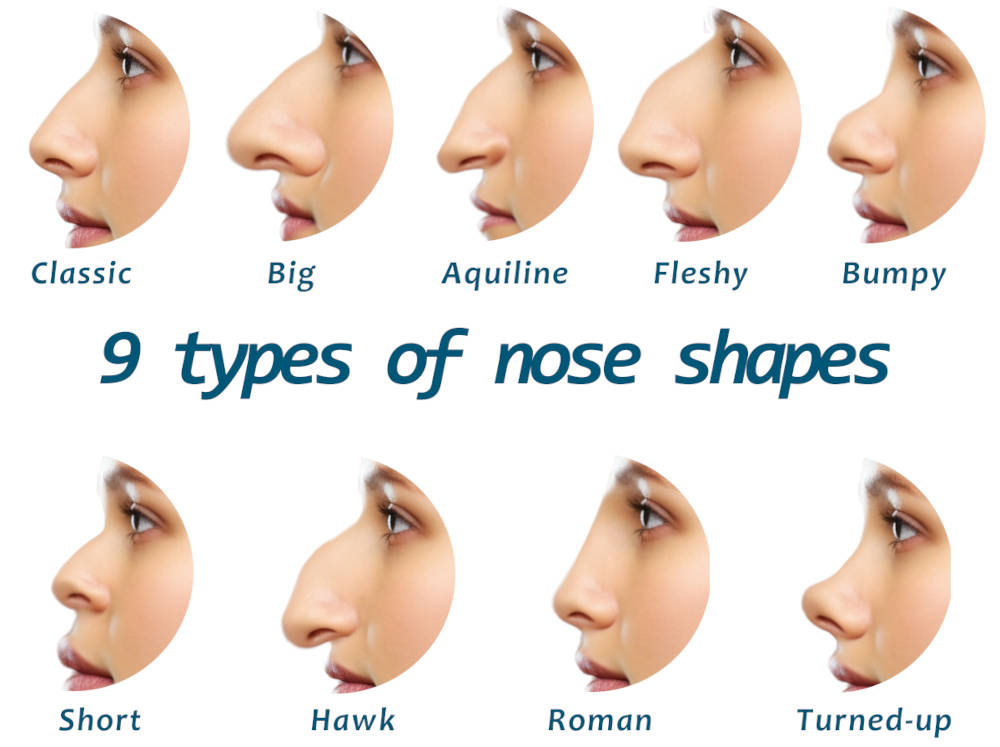
Discover the 9 most common nose shapes
There is a wide variety of nose shapes, so much so that one could say there are as many as there are people on Earth. The nose plays a crucial role in facial harmony, alongside the eyes and the mouth. In side profile, it is often the most prominent feature. Despite these many variations, we have grouped noses into nine main types. Our classification is based on several factors, including size, curvature (a bump or a hollow), orientation, the angle of inclination, and the specific characteristics of the tip.
So, what is your nose shape? And which one do you find the most aesthetically pleasing?
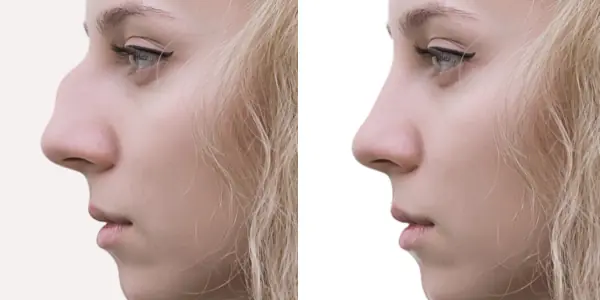
Want to try a rhinoplasty?
Send us a side-profile photo along with the changes you would like for your nose. We will provide an edited image to give you a preview of the potential outcome. You can then share it with your surgeon to confirm what is feasible and to get an estimate of the cost.The Visible Parts of the Nose
In an aesthetic nose assessment, several visible features are considered:
- The hollow between the forehead and the nasal root: located at the top of the nose, it marks the transition between the forehead and the nose.
- The nasal bridge: the upper part of the nose, extending from the root to the start of the tip. It can be straight, have a bump, or show a slight depression.
- The nasal tip: the end of the nose. It can be small or large, rounded or angular, symmetrical or asymmetrical, and sometimes bulbous.
- The columella: the strip of skin between the nostrils. It can be straight, tilted downward (drooping), or tilted upward (upturned).
- The nostrils: their width and shape vary, from narrow to flared, and from straight to more curved. The skin can be thin or thick.
List of nose types
Classic Nose
A classic (often considered “balanced”) nose is proportionate to the face—neither too small nor too large. There is a slight hollow between the forehead and the nasal root, and the bridge may have a subtle bump. The tip is gently rounded, with a mild angle at the junction between the nose and upper lip.
The nostrils are in proportion—neither too wide nor too narrow—creating a harmonious profile from the front and the side. This shape often matches current beauty standards, although standards change over time.
Large Nose
A large nose appears bigger in proportion to the face, in both profile and frontal views. The nostrils are usually larger as well. This is more common with age, as the nose can change over time. It may not have a specific deformity, but its size makes it more noticeable.
Upturned Nose
An upturned nose typically has a slightly concave bridge and a tip that rotates upward, making the nostrils more visible from the front. In some cases, it can accentuate the fold between the nose and the upper lip.
This shape is currently popular, and some people seek surgery to achieve it. It is often associated with a youthful, delicate look.
Drooping Nose
A drooping nose has a tip that points downward, sitting lower than the base of the nostrils, which can make the nose appear to “fall” forward. It is sometimes described as hooked, with a downward curve.
Humped Nose
A humped nose is defined by a visible bump along the nasal bridge. Some people feel the hump disrupts facial harmony and may consider correction.
Stepped Nose
The stepped nose is uncommon. It is characterized by a distinct break or “step” along the bridge. Unlike an upturned nose, the concavity is sharper and more angular. The tip is often more angular as well, and the nostrils are usually average or small.
Hooked Nose
A hooked nose often has thin skin that highlights a sharper, more angular structure. The tip typically sits slightly below the base of the nostrils, and the nose is often narrow. Opinions on this shape vary widely.
Flat Bridge Nose
A flat bridge nose has little to no hollow at the nasal root, creating a smoother transition from the forehead to the bridge. This is most noticeable in profile. The bridge remains relatively straight down to the tip, and the nostrils are usually average in size.
Flat Nose
A flat nose is relatively small in proportion to the face. It often has a more pronounced hollow at the nasal root near the eyes. The nostrils may be shorter but wider, sometimes giving a flatter appearance.
These are nine common nose shapes, but real-life variation is almost endless. Beauty standards also differ across cultures and change over time. For people who feel uncomfortable with their nose shape, cosmetic surgery—especially rhinoplasty—can be one option to improve confidence and comfort with appearance.
Nasal surgery is not only cosmetic. It can also correct deformities caused by injuries or congenital conditions. Nasal trauma is common in everyday accidents and contact sports, and fractures can occur because the nose is a delicate structure.
Some people also undergo nasal procedures to remove growths such as warts. Unlike standard rhinoplasty, which is often performed through internal incisions to reduce visible scarring, these procedures may require external incisions. In many cases, the resulting scars are far less noticeable than the original concern. A qualified surgeon must always explain the expected outcome before any procedure.
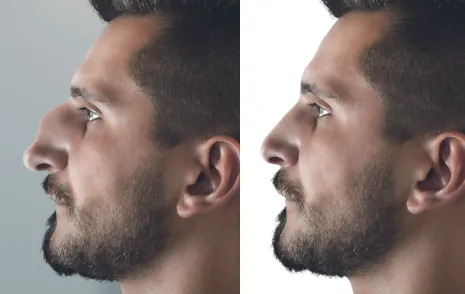
Want to try a rhinoplasty?
Send a clear side-profile photo along with the changes you want for your nose. We will send you an edited image as a preview of the expected result. You can then share it with your surgeon to confirm what is feasible and to get an estimate of the cost.