PROBLEM WITH MY NOSE
Problems encountered
Nose problems are varied and can be both functional and aesthetic. A functional nose problem means you cannot breathe normally through your nose.
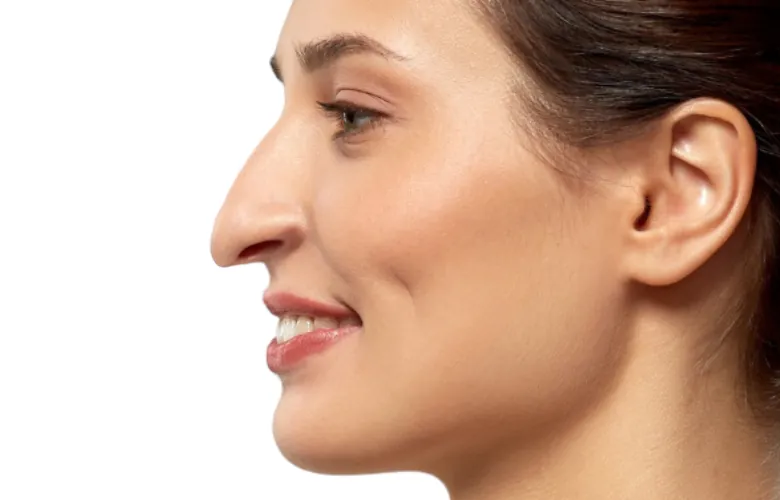
Aesthetic nose problems mean that you find your nose ugly, too big, too small, hooked, flattened, with a bump on the nose, deformed, or malformed. There are different nose shapes: aquiline, humped, Bourbon, straight, snub-nosed, flat, trumpet-shaped, upturned, etc.
What is rhinoplasty?
Rhinoplasty is a surgical procedure that involves changing the shape of the nose. The cosmetic surgeon will go through the inside of the nostrils to modify the cartilage and bones of the nose .
In general, the steps will be as follows:
- First consultation with the surgeon
- Numerical simulation
- Medical examinations to confirm the feasibility of the operation and validation of the patient’s informed consent.
- Intervention under anesthesia then resuscitation.
- Medical supervision at the hospital or clinic then return home.
- Follow-up consultation(s) made by the surgeon.
There are 2 types of rhinoplasty:
Open rhinoplasty
Open rhinoplasty is the most important because the nose will be turned up during the operation. The surgeon makes incisions inside the nostrils but also on the central ridge between the nostrils (columella). Open rhinoplasty will leave a small, relatively invisible scar.
Closed rhinoplasty
The principle of closed rhinoplasty is to make incisions only inside the nostrils. This allows the shape of the nose to be changed without leaving any visible scars. Recovery is shorter for this type of operation. However, closed rhinoplasty does not provide a perfect view of the entire structure of the nose and is therefore reserved for simple operations.
Rhinoplasty causes pain and swelling in the weeks following surgery. The operation can also lead to a loss of sensation in the nose. This sensation will usually return within a few weeks. Pain will be treated with painkillers, and swelling will be treated with cold (ice packs or ice gel).
Discover the 9 types of noses.
When is rhinoplasty performed?
– When the shape of the nose poses a problem for the person to breathe , when they have difficulty breathing through the nose and it is necessary to deviate or widen the nasal septums (functional rhinoplasty).
– When the patient has an aesthetic complex that could not be resolved by psychological help. Nose judged too big, too small, too flat, nose with a hump, nose with a hollow, hooked nose, trumpet nose, crooked nose … The aesthetics of the nose are extremely sensitive because it is at the center of the face, it plays an important role in identity and can be the object of mockery, remarks … which can cause a loss of self-confidence. We speak of aesthetic rhinoplasty (as opposed to functional rhinoplasty).
– The surgeon performs a restorative rhinoplasty when the nose has been broken or deformed during an accident, a fight, a combat sport, a fall (ice storm, mountain biking, …).
– When the patient has a birth deformity of the nose and feels the need to have it modified (nasal reshaping).
Rhinoplasty is generally not performed until late adolescence or adulthood, except in emergency cases. The nose changes during growth, and the result could be altered if the procedure is performed during childhood or adolescence.
Surgeons distinguish between thin-skinned and thick-skinned noses . This has a significant impact on the feasibility and outcome of the operation.
How much does a rhinoplasty cost?
It is difficult to give the price of a rhinoplasty because it will depend enormously on what the surgeon will do on the nose, the duration of the operation, the reputation of the surgeon, the technique used (open VS closed), the duration of the anesthesia, and the use of special equipment (piezosurgery, etc.).
Rhinoplasty costs on average $5,000 to $20,000.