How can you tell if you have a recessed chin?
(chin tilted back)
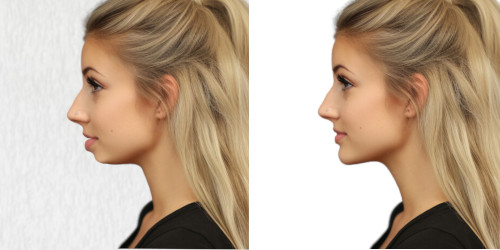
Surgical simulation
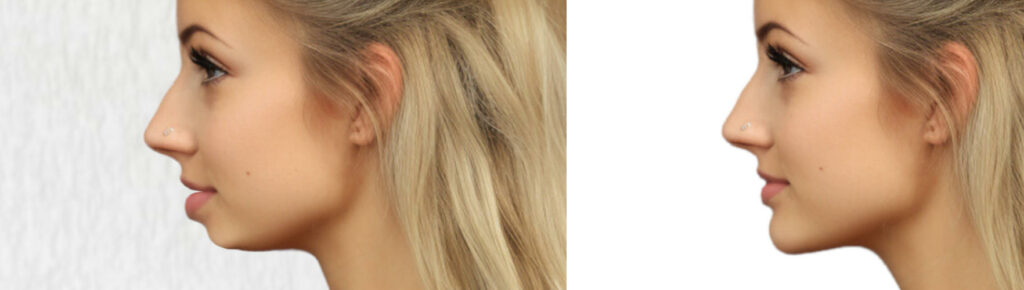
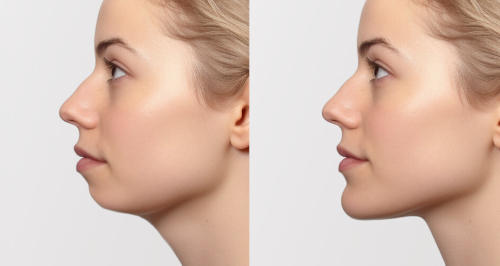
Upload a profile photo. A simulation of lower-jaw advancement surgery, genioplasty, or upper-jaw setback surgery is delivered. The image is ready to share with a surgeon.
The receding chin, also known as a retruded or set-back chin, is characterized by a chin that sits behind the other prominent facial features when viewed in profile (the forehead, nose, and lips). It is one of the three chin types.
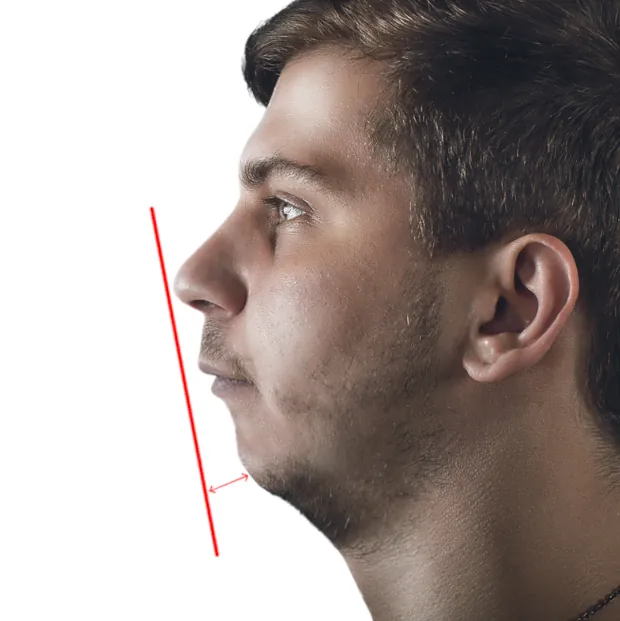
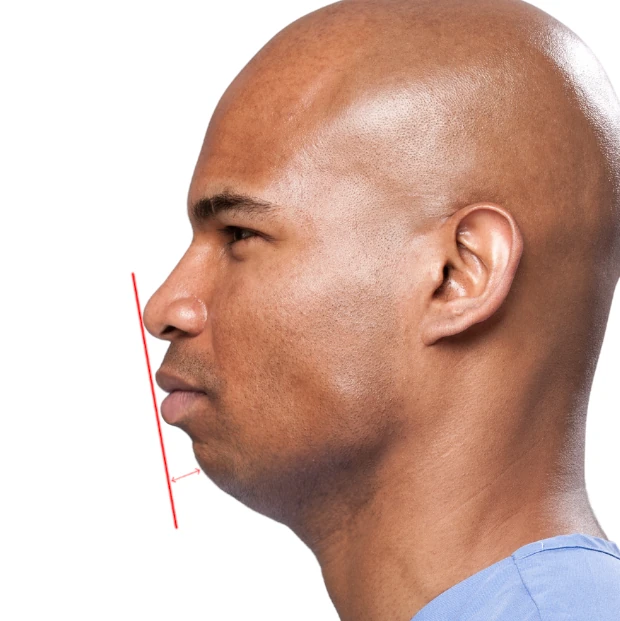
How can I tell if I have a receding chin?
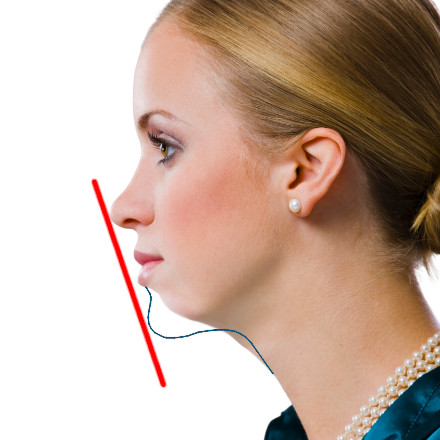
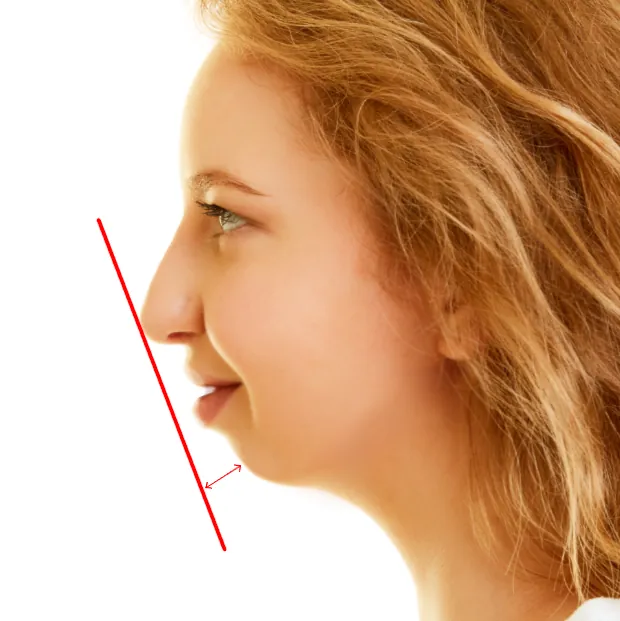
The easiest way to tell whether your chin is protruding is to take a profile photo. By drawing a line parallel to your facial profile, you can see whether your chin projects more or less beyond that line.
There is little to no indentation between the lower lip and the chin.
Excess neck skin or a double chin may also be noticeable.
Often, the lower lip sits behind the upper lip. The upper lip may even overlap the lower lip.
If the transition between the face and the neck is not well defined, this can be a characteristic—though not exclusive—sign of a receding chin.
There are three possible causes (which can occur together):
Underdeveloped chin cartilage and bone
A lower jaw (mandible) that sits too far back
An upper jaw (maxilla) that sits too far forward
How can I tell if I have a receding chin
Receding Jaw
Receding chin calculation
Recessed chin
Illustrative images
Which specialist can assess my receding chin?
Cosmetic surgeons and specialists in maxillofacial surgery, stomatology, and oral surgery are best placed to assess your chin. They may also perform an X-ray to evaluate your facial bone structure.
How can a surgeon move my chin back?
After assessing the shape of your chin, the surgeon will recommend a solution based on the issues identified (aesthetics, dental malocclusion, snoring, sleep apnea, etc.).
Jaw surgery (orthognathic surgery) – aesthetic and functional benefits (bite problems, sleep apnea, etc.)
You can evaluate your chin position using a profile photo. For an expert assessment, consult a surgeon.
Surgery simulation
Upload a profile photo. We will send you a simulation of lower jaw advancement surgery, genioplasty, or upper jaw setback surgery. You can then share the image with your surgeon.